Building and Remodeling for Florida's Climate
How wind, water, humidity, heat, and salt air shape construction and remodeling decisions in Jacksonville and coastal Northeast Florida.
The short answer
Building in Northeast Florida means designing for wind, water, humidity, heat, and, near the coast, salt air. The Florida Building Code sets the baseline, but good decisions go further: check your flood zone early, invest in waterproofing and ventilation, and choose materials and fasteners suited to your exposure.
Wind
Florida's building code includes wind-load requirements based on location and exposure. In practical terms, this affects:
- Roof-to-wall and wall-to-foundation connections, which keep the structure tied together
- Windows and doors, including impact-resistant products or approved opening protection where required
- Roofing systems and attachment
- Covered lanais and porches, which must be engineered to resist uplift
Any roofed addition or covered outdoor space should be designed and permitted with these loads in mind.
Water and flood
Many Northeast Florida properties near the ocean, the Intracoastal Waterway, the St. Johns River, and creeks and marshes are in designated flood zones. Before planning an addition, a new home, or an ADU:
- Look up your flood zone on FEMA's Flood Map Service Center or your local flood zone tools.
- Understand the elevation requirements that may apply to new construction or substantial improvements.
- Plan drainage so water moves away from the structure.
Substantial renovations in flood zones can trigger requirements to bring the structure into compliance. Ask about this early.
Humidity and moisture
Humidity is a quiet threat to Florida homes. It shows up as mold, failed finishes, and rot in hidden places.
- Bathrooms: a correctly installed and tested waterproofing system behind tile, proper shower slope, and adequately sized ventilation
- Kitchens: vented range hoods and attention to plumbing connections
- Building envelope: flashing, drainage planes, and sealed penetrations
- HVAC: properly sized systems that dehumidify, not just cool
Heat and sun
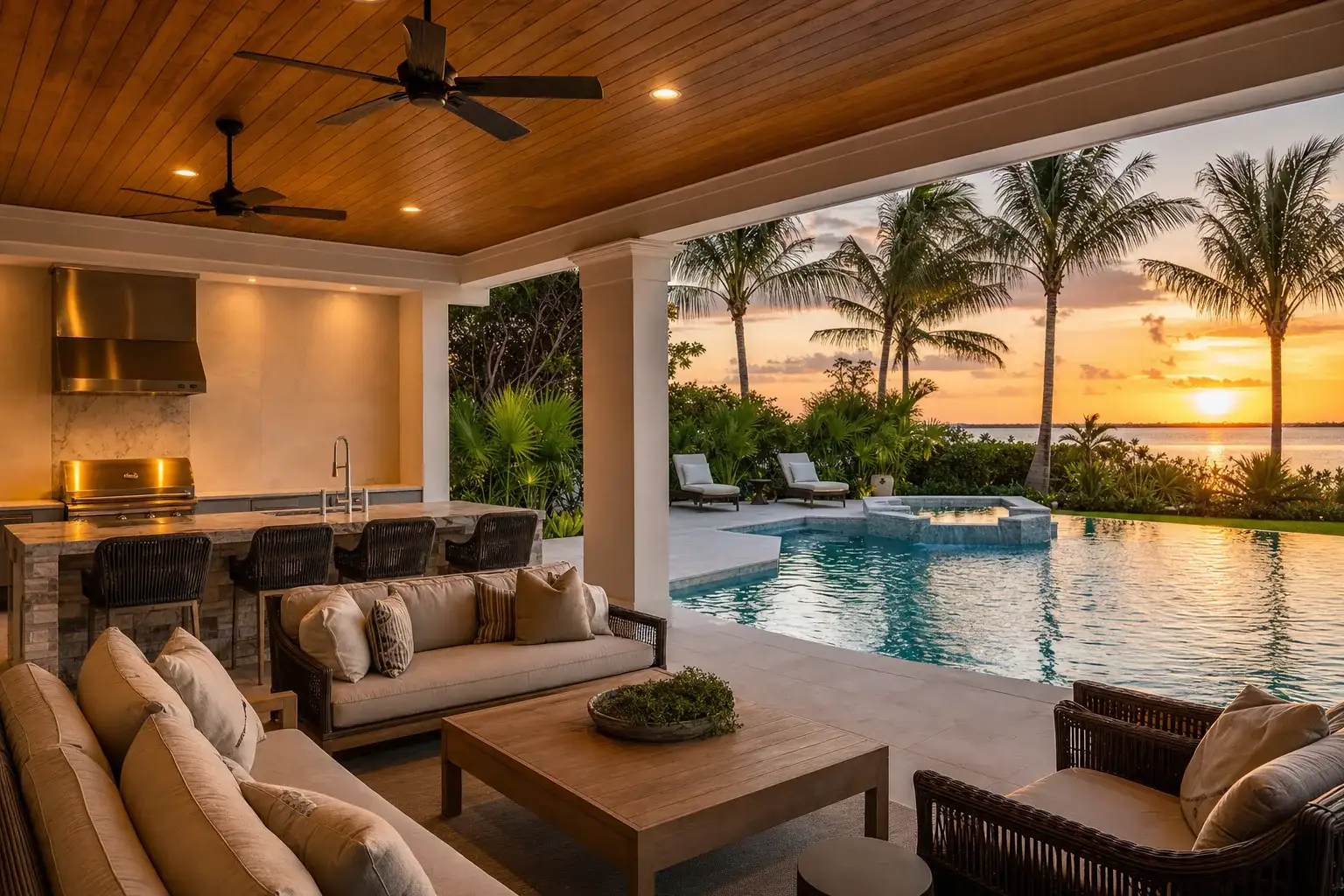
Sun exposure affects comfort and materials. Consider covered outdoor living for shade, light-colored and reflective roofing, quality window performance, and finishes that resist UV fading.
Salt air
At the Beaches and other coastal locations, salt air accelerates corrosion. Use corrosion-resistant fasteners, connectors, and hardware, and select exterior lighting, railings, and fixtures rated for coastal environments.
How T&A plans for it
Climate considerations are part of every T&A scope from the first site walk, from engineering coordination on lanais and additions to waterproofing details in bathrooms. See our outdoor living and bathroom renovation services.
Frequently asked questions
What building code applies to homes in Jacksonville?
Construction in Florida is governed by the Florida Building Code, a statewide code that includes wind-load and other requirements suited to Florida conditions. Local jurisdictions administer permits and inspections under it.
How do I know if my property is in a flood zone?
Check FEMA's Flood Map Service Center or your local government's flood zone tools using your address. Flood zone designation can affect required elevation, foundation design, and insurance.
What materials work best near the ocean in Florida?
Near the coast, choose corrosion-resistant fasteners and hardware, such as stainless steel where appropriate, and finishes, windows, and doors rated for coastal exposure. Salt air accelerates corrosion of standard metals.

Written by Tyler Wilson
Owner & Senior Project Manager, T&A Construction Consulting, LLC. Florida Certified Building Contractor, license CBC1267826. Jacksonville, Florida.